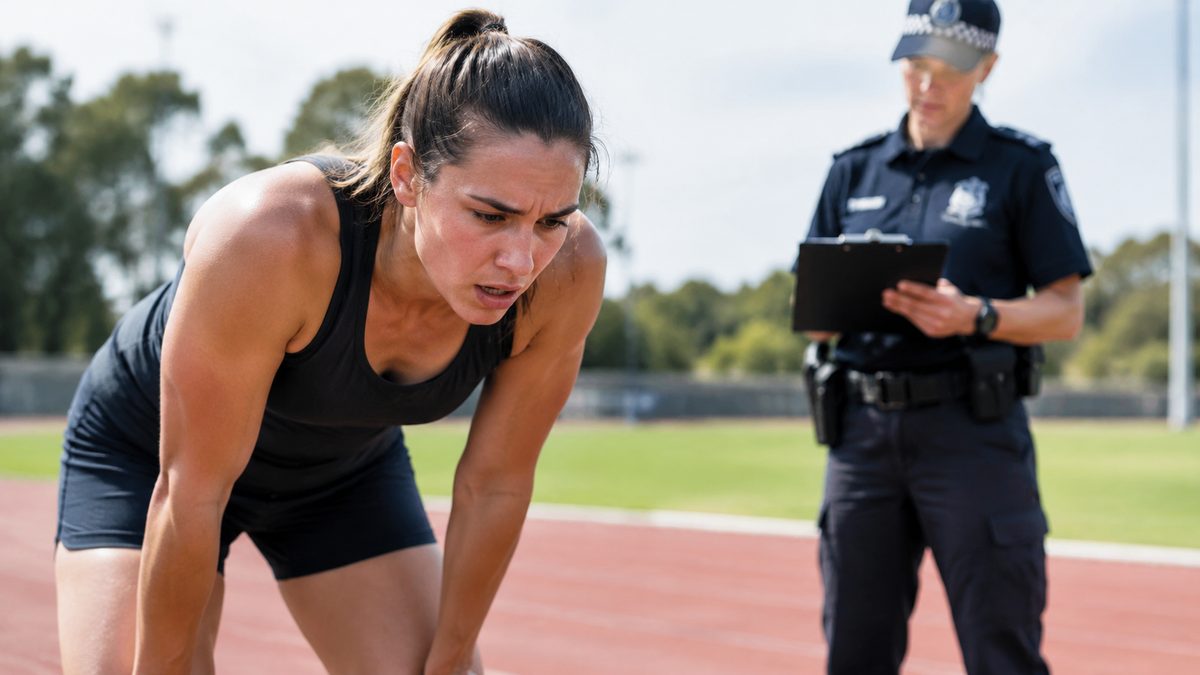
What Happens if You Fail the Queensland Police Fitness Test?
If you fail the Queensland Police fitness test, you do not pass that stage of the recruitment process and may need to wait, train, and complete another assessment. A failed attempt does not always end your goal of joining the Queensland Police Service. The exact result depends on your application stage, the reason you failed, and the instructions given by police recruiting staff.
Your first job is to read the result notice carefully. Do not assume that you can book another test at once. Do not assume that your whole application has been cancelled either. The official message from recruiting staff controls what happens next.
Does one failed fitness test end your police application?
A single failed fitness assessment is usually a failure at one recruitment stage, rather than proof that you can never become a police officer. You have shown that you did not meet the required standard on that day. You have not shown that you are unable to meet it after better preparation.
However, the failed result can stop your current progress. Police recruitment uses set stages because applicants must meet every required standard. Strong results in interviews, written testing, or other checks do not cancel a fitness failure.
Your application may be paused, closed, or moved back while you become eligible for another attempt. Recruitment policies and individual directions can change. Treat the written advice sent to you as the final word on your current application.
This distinction matters. Candidates often turn one bad result into a final judgment about themselves. The useful reading is much narrower: your performance did not meet the standard at the required time. That is a training problem unless recruiting staff identify another issue.
What will happen straight after an unsuccessful attempt?
The assessor will record that you did not complete one or more parts to the required standard. You may receive an explanation at the venue, followed by written advice from recruiting staff. That advice may state whether you can try again, when you may do so, and whether any part of your application must be repeated.
Listen closely even if you feel upset. Candidates often remember the word “fail” and miss the details that follow it. Write down the failed station, your recorded result, and any technical fault mentioned by the assessor as soon as you leave.
Ask for clarification if the instructions are unclear. Useful questions include:
- Which part of the assessment was recorded as unsuccessful?
- Was the result caused by performance, technique, or an incomplete assessment?
- Is a new booking available under the current application?
- Is there a waiting period before another attempt?
- Will any earlier recruitment stage expire before the next test?
Keep the email or letter with your application records. A verbal comment made at the testing venue may explain what happened, but formal recruiting advice determines your next step.
Will you have to repeat the whole assessment?
You should prepare as if you will need to demonstrate the full standard again unless Queensland Police recruiting tells you otherwise. Passing several stations during one attempt does not always create permanent credit for those results.
This catches some candidates. A person may fail one station by a small margin and spend every training session on that single weakness. On the next attempt, the weak station improves while a previously passed event falls below standard. Fitness changes when training becomes too narrow.
Keep every assessed ability ready. Give extra work to the failed station, but maintain the rest of your conditioning. If technique caused the result, practise the exact movement rules instead of chasing general fitness.
A realistic example is a candidate who reaches the needed running level in practice but loses time through poor turns. More long runs may add fitness without fixing the cause. Marking a short course, practising controlled changes of direction, and learning an even pace would address the actual fault.
How long will you need to wait before trying again?
The waiting period is the one stated by Queensland Police recruiting for your application. There is no safe reason to rely on an old forum post, a friend’s past attempt, or a social media comment. Recruitment rules can change, and another applicant may have been at a different stage.
Use the waiting period as a training block, not dead time. Your first week should identify why you failed. The remaining weeks should build enough capacity that passing no longer depends on a perfect day.
Do not rush into the earliest possible booking simply because it is available. A quick retest can feel productive, but it wastes an attempt if your result has barely changed. Book when repeated practice results show a clear margin above the required level.
If your application has a deadline, compare that date with the time needed to improve. Contact recruiting staff early if the dates appear to conflict. Silence does not protect your place in the process.
What if injury or illness caused the failed result?
An injury, illness, or medical event may be handled differently from a normal performance failure, but you must report it through the proper process. Tell the assessor when symptoms occur. Do not hide pain to protect your application.
Trying to finish while injured can turn a small problem into a long break from training. It can also produce a result that does not show your normal ability. Follow any direction to stop, seek medical care, or provide further information.
Do not diagnose yourself from the failed result. Sudden chest pain, fainting, severe breathing trouble, or a new loss of movement needs prompt medical attention. For less urgent pain, a qualified health professional can help you understand whether you need rest, treatment, or a staged return to training.
Recruiting staff decide how an incomplete or medically affected assessment changes your application. A doctor or physiotherapist can guide recovery, but cannot promise how police recruiting will record the attempt.
Should you challenge the result?
Ask for a review only when you have a clear reason to believe the assessment process or recorded result was wrong. Disappointment alone is not evidence of an error.
Start with facts. Record the station, the instruction you received, what occurred, and the result announced. Keep your account calm and brief. Ask which review process applies rather than demanding that the result be changed.
A technical failure can feel unfair when the physical task seemed easy. Yet movement standards form part of the assessment. If an assessor did not count a repetition because it failed the required form, the best response may be to fix the movement rather than dispute the rule.
Video from a gym session does not prove what happened during the official test. It can still help a coach find faults before your next attempt. Use review rights for genuine process concerns and use training for performance concerns.
How should you work out why you failed?
Separate the cause from the result. “I failed the run” is a result. Starting too fast, missing turns, poor recovery, or low aerobic fitness are possible causes. Each cause needs a different fix.
Review the attempt while the details are fresh. Consider these areas:
- Capacity: You could not sustain the required work even with sound pacing and form.
- Technique: Your movement did not meet the stated rules or wasted energy.
- Pacing: You used too much effort early and could not finish at the required level.
- Preparation: Sleep, food, hydration, or the warm-up left you below your normal level.
- Pressure: Nerves caused rushed movement, missed instructions, or poor decisions.
One cause will often matter more than the others. Fix that cause first. General workouts feel useful, but they can hide the gap that caused the official failure.
For example, imagine a candidate who completes every practice session alone but falls behind when audio cues and other candidates are present. The missing skill may be test control rather than raw fitness. A timed mock assessment with the correct cues would give better feedback than another hard gym session.
What should change before your next attempt?
Your training should produce proof that you are ready. Hope is not proof. One successful practice is weak evidence because a good day can hide poor consistency.
Begin with a controlled practice assessment after you have recovered from the failed attempt. Record the result and any form errors. Use that result to set the next training block.
A sound retest plan should include:
- Specific practice for the failed part of the assessment.
- Enough recovery between hard sessions to allow improvement.
- Regular maintenance work for every other tested ability.
- Mock assessments completed under conditions close to the real test.
- A reduction in hard training before the assessment so fatigue does not hide your fitness.
Do not test yourself at maximum effort every day. A test measures ability; it does not build every part of that ability. Training sessions should improve weak points, while planned mock tests confirm that the plan is working.
Technique deserves early attention. A candidate who trains an invalid movement simply becomes better at repeating the same error. Get feedback from a coach who understands the current assessment rules. Ask the coach to count only repetitions that would meet the official standard. Get feedback from a coach who understands the current Queensland Police fitness test guidance.
How far above the minimum should you be before rebooking?
Aim to clear the required standard with a repeatable margin. Reaching the exact minimum once in ideal conditions leaves little room for nerves, a poor night’s sleep, or a small pacing mistake.
Your margin does not need to come from reckless extra effort. It should come from control. You should know how the session feels, when to change pace, and how to keep valid form as you tire.
Use several practice results rather than your personal best. If most attempts fall below the line and one attempt reaches it, you are not ready. If your recent attempts clear the standard with sound form, your chance of repeating that result is much stronger.
Stop chasing improvement close to test day. Hard last-minute sessions create fatigue and can cause injury. The final days are for light practice, normal meals, enough water, and steady sleep.
Can a failed test affect later recruitment stages?
Yes. A delay can affect the timing of your application even when another attempt is allowed. Other results, checks, or documents may have their own time limits. A new intake may also follow a different schedule.
Review every message in your applicant portal or email account. Check whether recruiting staff have asked for an action by a set date. Missing an administrative deadline can create a second problem that fitness training cannot solve.
Keep your contact details current. Check junk mail. Respond to requests in the format given. If you need to provide medical information or another document, send it through the stated channel and keep a copy.
Do not withdraw your application in frustration unless you have decided to stop. Wait for formal advice and make the next decision from the facts in front of you.
What mistakes make a second failure more likely?
The biggest mistake is treating the failed attempt as proof that you need more effort. Effort without a clear cause can repeat the same result.
Other common errors include training through pain, copying an outdated test, and booking before practice results are stable. Some candidates also change their whole program after one poor day. That can remove work that was helping while failing to fix the true weak point.
Avoid comparing your waiting period or application outcome with another candidate’s story. Their result may involve different instructions, dates, or circumstances. Use official advice for the process and measured practice for your readiness.
Do not let embarrassment keep you from seeking coaching. A failed assessment gives you useful data. The result becomes costly only when you ignore what it revealed.
What should you do now?
Read your official result notice, confirm whether and when you may retest, and write down the exact reason for the unsuccessful result. Then build your training around that cause while keeping every other assessed skill ready.
Your single next step is to contact Queensland Police recruiting for your current retest instructions before you book or change your training plan.