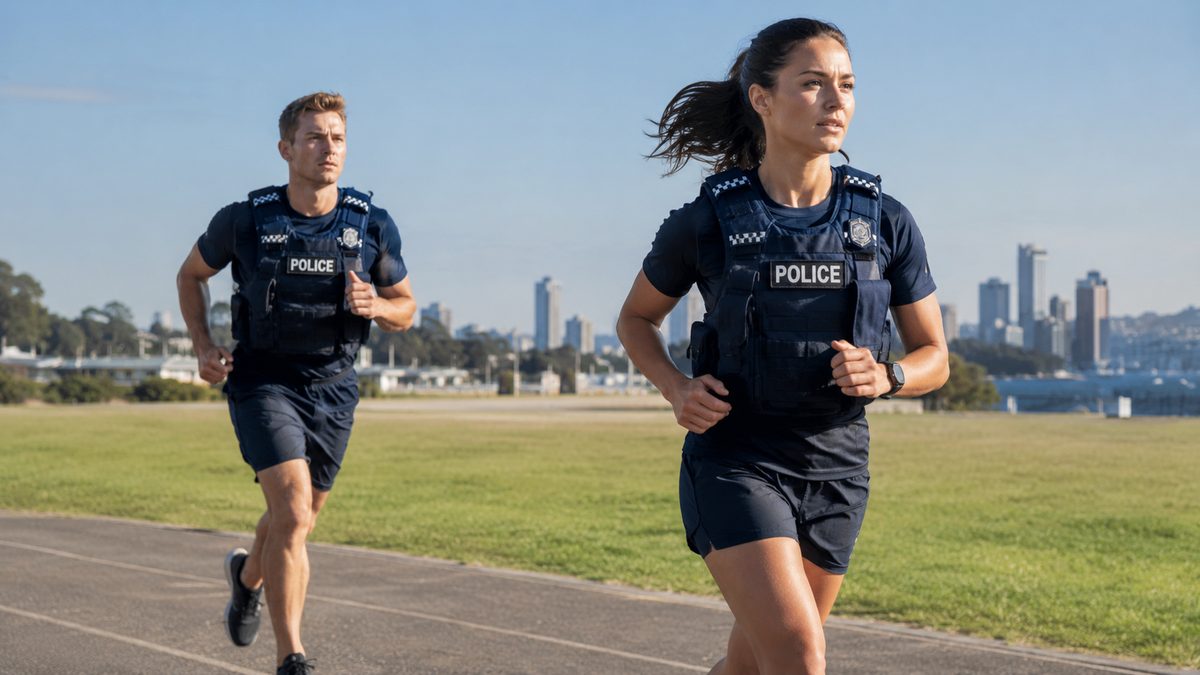
Are Queensland Police Fitness Standards Different for Age or Gender?
Queensland Police fitness standards do not become easier with age, but one requirement may differ by gender: the Push-up standard. The main aerobic, swimming and Agility requirements generally use the same pass mark for all applicants. This means an older candidate must meet the same core entry standard as a younger candidate.
The key word is entry. The Queensland Police Service sets a minimum level that applicants must reach before recruit training. It is not a contest against people in your age group. You must prove that you can meet the physical demands attached to the role, regardless of when you were born.
Applicants should still check the current official assessment guide before training or booking a test. Recruitment rules can change. Your invitation, candidate portal and official instructions should take priority over old videos, online comments or advice from a past applicant.
Which standards stay the same for every age group?
The core pass marks are normally fixed rather than split into age bands. A candidate in their twenties and a candidate in their forties should expect to face the same required level for aerobic fitness, swimming ability and Agility.
This catches some applicants by surprise. Many public fitness tests use age-based scoring. Community fun runs, workplace health checks and some sporting tests compare a person with others of a similar age. Police recruitment serves a different purpose. It asks whether each applicant has enough capacity to begin training and perform operational tasks safely.
An older applicant does not receive extra time because recovery may be slower. A younger applicant does not need to reach a higher shuttle-run level simply because youth may offer a physical edge. Both must cross the stated line.
Age can still change how you should prepare. It affects recovery speed, training history and Injury Risk. It does not usually change the pass mark. Someone returning to exercise at 42 may need a longer build-up than an active 22-year-old. The target remains the same, but the safest path to it may look very different.
Where can gender change the requirement?
The Push-up station is the part candidates should examine most closely. Queensland Police Service material has used different minimum Push-up numbers for male and female applicants. Candidates should confirm the current numbers and the way the recruitment process records their applicable standard.
A different repetition target does not mean the movement rules become loose. Each repetition must meet the required form. A candidate can perform more than the minimum and still fail if several repetitions are not counted.
Gender does not usually create separate standards for every station. Applicants should not assume there will be a different shuttle-run level, a wider Agility time or extra swimming time. Unless current official instructions state otherwise, prepare for the common standard.
This distinction matters because the phrase “different standards” can sound broader than it is. In practice, the difference may apply to one station while the other pass marks remain fixed. Read each event separately instead of looking for one rule that covers the whole assessment.
Why are most entry standards fixed rather than age-adjusted?
The assessment checks readiness for a common training pathway. Recruits may need to run, change direction, control their own body weight and work while tired. Those tasks do not change because one recruit is older than another.
A fixed standard also gives the test a clear pass point. Every applicant knows what level must be reached. The assessment is not trying to rank the best athlete. It screens for a base level of physical capacity.
That explains why a minimum can look modest on paper while still being firm on test day. You do not gain marks from another station to cancel a failed result. Strong swimming will not erase a failed run. Excellent aerobic fitness will not make invalid Push-up repetitions count.
The minimum should therefore be treated as a gate, not a training goal. If your best result only equals the pass mark, a poor night of sleep, hot weather or test nerves can put you below it. A useful preparation plan builds a buffer without turning every session into a maximum effort.
Does the assessment judge Body composition or Grip strength differently?
Body composition may come up during health, medical or general suitability discussions, but candidates should not confuse it with the scored physical stations. A person’s appearance does not show whether they can pass the required tasks. A lighter applicant may struggle with upper-body control. A larger applicant may still have strong aerobic fitness and sound movement skills.
Grip strength can help with policing tasks and gym training, yet it should not be mistaken for an automatic substitute for a listed pass event. Training Grip strength may support carrying, pulling and control work. It will not replace the need to meet the actual recruitment standards.
This is where generic police fitness advice can lead people off course. A program may include heavy carries, obstacle work or long runs because those exercises look job-related. They can be useful, but the first preparation priority is the exact assessment you must pass. Extra work should support that goal rather than drain energy from it.
Use the official event list as your map. If Body composition or Grip strength appears in a medical form, recruitment notice or assessment instruction, follow that document. Do not add an unofficial pass mark based on another police service, defence test or fitness website.
How should older applicants prepare for the same standard?
Older applicants should give themselves more time, especially after a long break from running. The common mistake is trying to match the weekly load of a younger person who already plays sport. That can turn a manageable standard into an avoidable tendon or calf Injury.
Start by measuring your current result under conditions that resemble the test. Use the stated course dimensions, movement rules and rest periods. Record the result without adding generous estimates. That first score shows the gap between your present ability and the required mark.
Next, build training in small steps. Aerobic sessions should develop the ability to repeat short efforts and recover. Strength sessions should improve the exact body control needed for valid repetitions. Agility work should begin at a controlled speed so that turning skill improves before effort rises.
Recovery belongs inside the plan. A rest day is productive when it allows the next quality session to happen. Pain that changes your running stride or Push-up position is a warning, not proof that training is working.
Consider a hypothetical 45-year-old applicant who can reach the required running level but develops shin pain after testing it three times in one week. More test attempts will not solve the problem. Reducing impact, building lower-leg capacity and spacing hard runs can preserve fitness while lowering Risk. The pass mark has not changed. The route toward it has.
Should younger applicants expect the test to be easy?
No. Age offers no protection from poor technique or weak preparation. A young applicant who trains at the gym may still struggle with paced running, swimming or fast direction changes. General fitness does not always transfer neatly to a rule-based assessment.
Younger candidates often create problems by training too hard too soon. They may repeat the full test, chase fatigue and ignore movement quality. This approach feels specific, but it can stall progress. Testing measures fitness. Training builds it.
A better approach separates the main needs. One session can build running capacity. Another can refine Push-up form. A later session can practise Agility at increasing speed. The parts can then be joined during planned mock assessments.
The same lesson applies to strong athletes. A runner may have enough aerobic power but lose time through poor turns. A swimmer may handle the pool with ease but misjudge the shuttle pace. A strength-trained candidate may lose Push-up repetitions because their depth or body line does not match the test rule.
How do test rules affect whether a repetition or attempt passes?
Fitness is only part of the result. You must also follow the movement standard and the Communication protocol used by assessors.
The Communication protocol may cover when to start, where to wait, how warnings are given and when an attempt ends. Listen to the full briefing even if you have watched the event online. A local demonstration or current instruction can correct an outdated assumption.
For Push-up repetitions, train the required start position, depth and lockout. Ask a coach or training partner to judge the movement from the side. People often think they are reaching full depth because effort changes their sense of position. Video can expose a sagging hip, shortened range or incomplete finish.
For Agility, learn the route before adding speed. A missed line or wrong turn can cost more than a small gain in sprint speed. Practise clean foot placement and controlled deceleration. Fast entry into a turn is useless if you slip, overshoot or take the wrong path.
For paced running, follow the audio rather than racing ahead. Reaching the line early wastes energy and can break rhythm. For swimming, practise continuous movement under the current rules instead of assuming that casual pool fitness will be enough.
What if your documents seem to give conflicting standards?
Use the newest Queensland Police Service source. Check its date and confirm that it applies to police recruit entry. Standards from another state, an older recruitment campaign or an internal workplace assessment may look similar while serving a different purpose. Queensland Police fitness resources can help clarify current entry standards and state-specific requirements.
If the wording still appears unclear, contact the recruitment team before relying on an assumption. Ask a narrow question. State the document name, its date and the standard you want confirmed. Keep the reply with your preparation records.
This matters most when checking gender categories, modified testing arrangements or a recent rule change. A social media answer may describe what happened to one person several years ago. It does not override the instructions issued for your assessment.
Do not wait until test day to raise a known uncertainty. Clarifying the rule early lets you train the correct movement and target. It also removes stress from a day when your attention should stay on pacing, technique and assessor directions.
How far above the applicable minimum should you train?
A sensible target sits clearly above the pass line while leaving room for steady training. The exact buffer will vary by event, but your result should remain safe on an ordinary day, not only after perfect rest and ideal conditions.
Track more than your personal best. Record several recent attempts. A single excellent score can hide an unstable level. If five well-spaced practice results all clear the standard with correct form, that evidence is stronger than one maximum attempt followed by weaker results.
Use practice conditions that reveal weak points. Complete some sessions after a normal workday. Train at the time of day when possible. Practise transitions and waiting periods without turning every workout into a full simulation.
Risk rises when candidates panic close to the assessment. Sudden extra running, daily maximum Push-up sets and rushed Agility drills can create soreness without enough time for adaptation. In the final stage, protect the fitness you have built. Keep useful intensity, reduce needless volume and arrive healthy.
What should you do now?
- Find the current official standard. Confirm which requirements apply to your application, including the stated gender-based Push-up target.
- Test each event by its real rules. Use the correct course, audio, technique and Communication protocol.
- Build a clear buffer. Plan training around repeated passing results rather than one lucky personal best.
- Adjust the training load to your body. Age does not lower the standard, but it may mean you need more recovery and a longer build-up.
- Resolve uncertainty before assessment day. Ask Queensland Police Service recruitment for written guidance when current documents appear unclear.
Your single next step is to verify your current age and gender requirements in the official candidate material, then complete one accurately judged baseline test.